

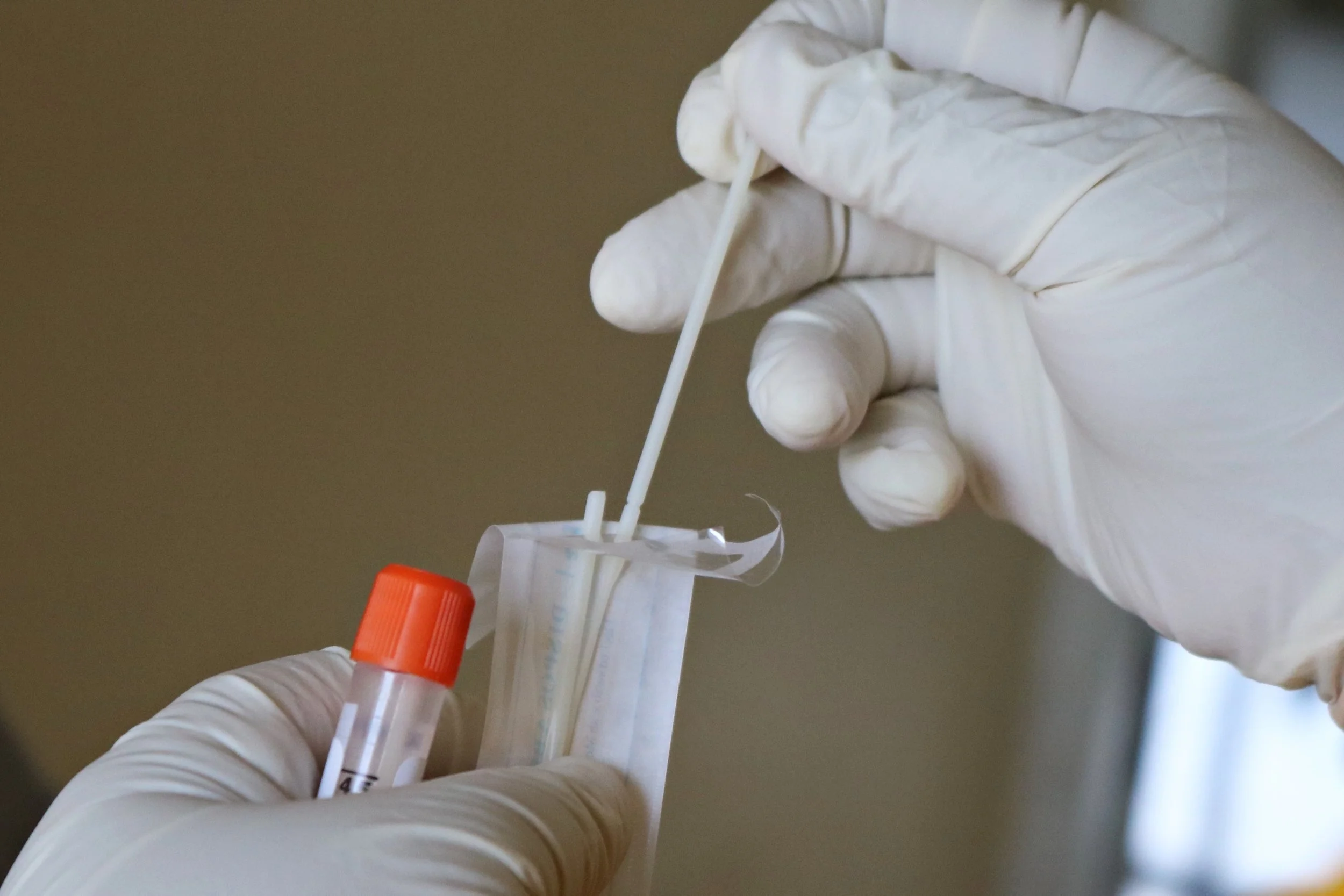
To establish paternity in Kentucky, eligible parents can complete a notarized Voluntary Acknowledgment of Paternity and submit it to the Office of Vital Statistics, or obtain a District Court determination. Kentucky also allows a Three-Way Paternity Affidavit in certain cases when the mother, her husband, and the biological father all agree (Kentucky birth registration and paternity law, KRS 213.046; Kentucky paternity determination law, KRS 406.021).
Start by checking who is listed on the birth certificate, whether there is an earlier acknowledgment or order, and whether the mother was married during the period from conception through birth. A DNA test addresses the biological relationship; a test result alone does not establish or change legal paternity. This guide provides general Kentucky information, not legal advice (KRS 213.046; KRS 406.021).
What does establishing paternity mean in Kentucky?
Establishing paternity legally recognizes the father-child relationship. Kentucky uses designated acknowledgment forms that can have the same legal weight as a paternity judgment. Establishing paternity can provide a basis for seeking child or medical support, but signing the affidavit does not automatically give the father custody or establish a visitation schedule (KRS 213.046; KRS 406.021; Kentucky paternity establishment brochure).
GameDay DNA’s guide to what legal paternity means explains the difference between finding out who the biological father is and establishing who is legally recognized as the father.
What if the mother was married to someone other than the biological father?
Kentucky looks at marriage at conception, at birth, and at any time in between. If the mother was married during that period and there is no dispute, the birth-registration law generally calls for listing the husband as the father. The law has separate provisions when the marital relationship was interrupted for more than ten months before birth, so do not assume that living apart or being divorced by the time of birth automatically determines which route to take (KRS 213.046(9)–(10)).
When a Three-Way Paternity Affidavit may work
If the mother says her husband is not the biological father, the husband agrees, and the biological father agrees, the three may be able to sign a notarized Three-Way Paternity Affidavit (Form VS-8C). Kentucky lists this form for removing a legally named husband from the certificate and acknowledging the biological father in qualifying circumstances. Contact the Office of Vital Statistics to confirm whether your circumstances and any earlier orders allow that route (KRS 213.046(9); Kentucky birth-record amendment regulation, 901 KAR 5:070; Kentucky paternity establishment brochure).
If a required signer does not agree or the question cannot be resolved through the three-way process, Kentucky directs the matter to District Court. Do not use the ordinary two-parent affidavit to try to bypass a husband or an existing paternity determination (KRS 213.046(9)–(10)).
How to establish paternity in Kentucky with a voluntary acknowledgment
At the hospital or birthing facility
Eligible parents can ask hospital staff for the Paternity Affidavit (Form VS-8B) at the time of birth. Both parents sign before a notary. The form goes to the Office of Vital Statistics with the birth registration. Bring valid government-issued photo identification and ask staff how they will submit the completed paperwork (KRS 213.046(3); 901 KAR 5:070; Kentucky paternity establishment brochure).
After the birth certificate has been filed
Leaving the hospital without signing does not automatically mean you need to go to court. When no father is designated on the registered birth certificate and both parents are otherwise eligible, Kentucky provides the Declaration of Paternity (Form VS-8). Ask your local health department or child support office where to complete it, what identification is needed, and how the original is sent to Vital Statistics (901 KAR 5:070; Kentucky registrar guidelines; Kentucky paternity establishment brochure).
If either parent is a minor, Kentucky uses the court process rather than the standard affidavit. If a parent is unsure about biological fatherhood, seek guidance about testing before signing. If you are still expecting, GameDay DNA’s guide to prenatal paternity testing in Kentucky explains testing options; a prenatal result does not replace Kentucky’s paternity paperwork or a court determination (KRS 213.046(3); Kentucky paternity establishment brochure).
How long do you have to cancel a Kentucky paternity acknowledgment?
Do not assume you have a full 60 days. Either signing parent can ask to rescind the acknowledgment. Kentucky’s early period ends at the earlier of the 60-day mark or the date of an administrative or judicial proceeding relating to the child, including one to establish child support. For the 60-day calculation, start with the notarized signing dates, not the date an updated birth certificate arrives. If the dates differ or a proceeding is pending, confirm the deadline immediately (KRS 406.025; Kentucky paternity establishment brochure).
Contact the Office of Vital Statistics’ Birth Amendments Unit promptly for the Rescission of Paternity Affidavit (Form VS-8E) and current submission instructions. After the applicable early period, seek legal advice about a court challenge based on fraud, duress, or material mistake of fact. A private DNA result does not cancel an acknowledgment or stop an existing support order (Kentucky registrar guidelines; KRS 406.025; KRS 406.091).
Can Kentucky Child Support Services help with DNA testing?
Yes. The Department of Child Support Services, within the Kentucky Office of the Attorney General, helps establish paternity and child support. If parentage is uncertain, ask the assigned office how testing will be arranged and who pays. Kentucky law permits genetic testing to be ordered administratively in qualifying cases; do not assume that a privately booked test will be accepted or reimbursed (Kentucky Attorney General’s Child Support Services page; KRS 406.091).
If a case is already open, contact the case office before providing samples. Ask who needs to attend, what identification to bring, and how results must be delivered. GameDay DNA’s guide to paternity testing and child support explains how testing fits into the larger process.
When should you use Kentucky District Court?
District Court may be needed when someone will not sign, one parent is a minor, paternity is disputed, or a prior legal relationship must be addressed. Kentucky law allows a paternity complaint from the mother, alleged father, child, or certain other people or agencies that substantially contribute to the child’s support. The statute provides for the county attorney, the Attorney General’s office, or its designee to bring the action on an eligible complainant’s request (KRS 213.046; KRS 406.021).
A contested case can involve genetic testing. Under Kentucky law, a party can request it with a supporting sworn statement, and testing is required unless there is good cause not to order it. If you are served with court papers, follow the stated response deadline rather than waiting for a privately ordered test. A properly served case can result in a default determination if the defendant fails to respond as required (KRS 406.091; KRS 406.021).
What kind of DNA test is appropriate for an official Kentucky case?
A self-collected at-home kit is for personal information, not a substitute for testing required by a court or agency. Kentucky law provides for qualified genetic examiners and recognizes verified chain-of-custody documentation in its testing rules. Before collection, confirm which laboratory or provider the receiving authority accepts, who must participate, how identification is verified, and where the report must go (KRS 406.091).
Read GameDay DNA’s legal paternity test process for questions to ask before your appointment. If the possible father is unavailable, grandparent DNA testing in Kentucky explains an indirect option. Confirm whether the court or agency will consider that evidence before booking.
How do you add or change a father on a Kentucky birth certificate?
If no father is listed, ask if you qualify for the post-registration VS-8 process. If a father is already listed, tell Vital Statistics how he was added. A qualifying three-way affidavit may apply to a husband listed because of marriage. If paternity was already recorded based on a properly completed affidavit, further paternity changes generally require a District Court order, apart from a valid rescission. A laboratory cannot change the record for you (KRS 213.046(9)–(10); 901 KAR 5:070; Kentucky registrar guidelines).
For general background, read GameDay DNA’s guide to changing the father on a child’s birth certificate. Follow Kentucky Vital Statistics’ instructions for your particular record rather than sending a DNA report on its own.
Frequently asked questions about establishing paternity in Kentucky
Is a DNA test always required?
No. Eligible parents who agree about biological fatherhood may sign the voluntary acknowledgment without routine DNA testing. If either parent is unsure, ask about testing before signing a legally binding document (Kentucky paternity establishment brochure).
Does a Kentucky paternity affidavit give the father custody or visitation?
No. The affidavit establishes paternity; it does not automatically award custody or set a visitation schedule. If parents need an enforceable arrangement, they can ask about the separate court process (Kentucky paternity establishment brochure).
How much does a paternity test cost in Kentucky?
If testing is part of an open case, ask the case office about charges before scheduling. For private testing, GameDay DNA’s paternity testing cost guide explains what affects the price. Private testing, court proceedings, and birth-record requests are separate steps, so confirm the cost of each with the relevant provider or office.
Does GameDay DNA provide immigration DNA testing?
No. GameDay DNA does not provide or coordinate immigration DNA testing. For immigration or visa-related DNA testing, contact DNA Diagnostics Center (DDC) directly.
Confirm your next step before signing or scheduling a test
If both parents agree and qualify, ask the hospital or local health department which form applies. If there is a dispute, an existing legal father, a minor parent, or an open support case, ask Kentucky Child Support Services or a Kentucky family-law attorney which process to follow before you buy a test (Kentucky paternity establishment brochure; Kentucky Attorney General’s Child Support Services page).
To compare paternity testing options in Kentucky, call GameDay DNA at 302-527-1789 or email info@gamedaydna.com. If you are testing for a non-immigration official matter, have the receiving authority’s collection and reporting instructions ready before scheduling.
