

To establish paternity in Texas, eligible parents can sign an Acknowledgment of Paternity (AOP) through an AOP-certified entity. If another man is presumed to be the father, the voluntary route also requires a valid Denial of Paternity (DOP). If the necessary people won’t sign or paternity is disputed, a court can determine paternity and may order DNA testing (Texas Office of the Attorney General’s AOP guide; Texas Family Code Chapter 160; Texas court-ordered paternity guidance).
What does establishing paternity mean in Texas?
Paternity is legal fatherhood. A valid AOP filed with Texas Vital Statistics has the same effect as a court determination of paternity. But it does not set a child support amount, assign custody, or create a visitation schedule. Those issues may need a separate order (Texas Family Code § 160.305; Texas’s AOP rights and responsibilities notice).
In practical terms, a DNA report answers a biological question; an effective acknowledgment, an unrebutted legal presumption, or a court determination can establish the legal relationship. GameDay DNA’s guide to what legal paternity means explains why knowing who the biological father is and documenting legal fatherhood are different steps (Texas Family Code §§ 160.201 and 160.305).
How to establish paternity in Texas with an Acknowledgment of Paternity
Use the voluntary route when the mother and biological father agree and meet the filing requirements. If either person is uncertain about biological fatherhood, don’t sign first and test later. If the child already has an acknowledged or court-adjudicated father, a new AOP cannot simply replace him (Texas’s AOP rights and responsibilities notice; Texas Family Code § 160.302).
Contact an AOP-certified entity. Ask the hospital birth registrar whether the hospital can help, or use the Texas Attorney General’s locator and AOP hotline at 866-255-2006. Both parents must work with a certified entity to complete and file the acknowledgment (Texas Office of the Attorney General’s AOP guide).
Complete and sign the acknowledgment. The mother and man acknowledging paternity sign under penalty of perjury. If another man is presumed to be the father, tell the certified entity before anyone signs. If the parents are in different locations, the entity can explain how they can sign separately or whether DocuSign is available (Texas Family Code §§ 160.302–160.304; Texas Office of the Attorney General’s AOP guide).
Confirm filing with Texas Vital Statistics. Ask for a copy and confirm the filing date. The acknowledgment can be signed before birth, but it takes effect at birth or upon filing, whichever is later. When both an AOP and a DOP are required, neither is valid until both are filed (Texas Family Code § 160.304).
What if another man is presumed to be the father in Texas?
Texas generally presumes that the mother’s husband is the father if the child is born during the marriage or before the 301st day after the marriage ends. Marriage is not the only basis: a man can also be presumed to be the father if he continuously lived with the child for the first two years of the child’s life and represented the child to others as his own (Texas Family Code § 160.204).
If everyone agrees: The presumed father and mother complete the denial section, and the mother and biological father complete the acknowledgment. Work with an AOP-certified entity to make sure both are filed. The denial alone does not establish the biological father’s paternity (Texas’s AOP rights and responsibilities notice; Texas Family Code §§ 160.303–160.305).
If someone won’t sign or there’s already an order: Ask a Texas family-law attorney about the court route. A case to determine parentage when the child has a presumed father generally must be filed no later than the child’s fourth birthday, subject to statutory exceptions. That four-year rule is not the ordinary deadline for canceling a signed acknowledgment (Texas Family Code §§ 160.302, 160.307 and 160.607).
Can you cancel a Texas Acknowledgment or Denial of Paternity?
Yes, but the deadline can arrive before you expect. Under Texas Family Code § 160.307, a signer must file before the earlier of the 60th day after the AOP or DOP takes effect, or the date a court proceeding about the child is initiated if the signer is a party. A child support case can trigger the earlier cutoff. Use the effective date, not automatically the date you signed (Texas Family Code §§ 160.304 and 160.307).
Before the deadline: File the state rescission form VS-158 with Texas Vital Statistics and follow the statute’s mail-notice requirements for the other relevant signers and, when applicable, the child support agency. Calling the hospital or ordering a DNA test does not cancel the filing (Texas Office of the Attorney General’s AOP guide; Texas Family Code § 160.307).
After the deadline: Under § 160.308, a signer may challenge an acknowledgment or denial in court only on grounds of fraud, duress, or material mistake of fact, and must start that challenge before an order affecting the child is issued. If there’s already a support order, ask a lawyer whether Texas’s separate mistaken-paternity process applies. A private test does not stop support payments or erase arrears (Texas Family Code § 160.308; Texas Office of the Attorney General’s mistaken-paternity guidance).
How does court-ordered paternity testing work in Texas?
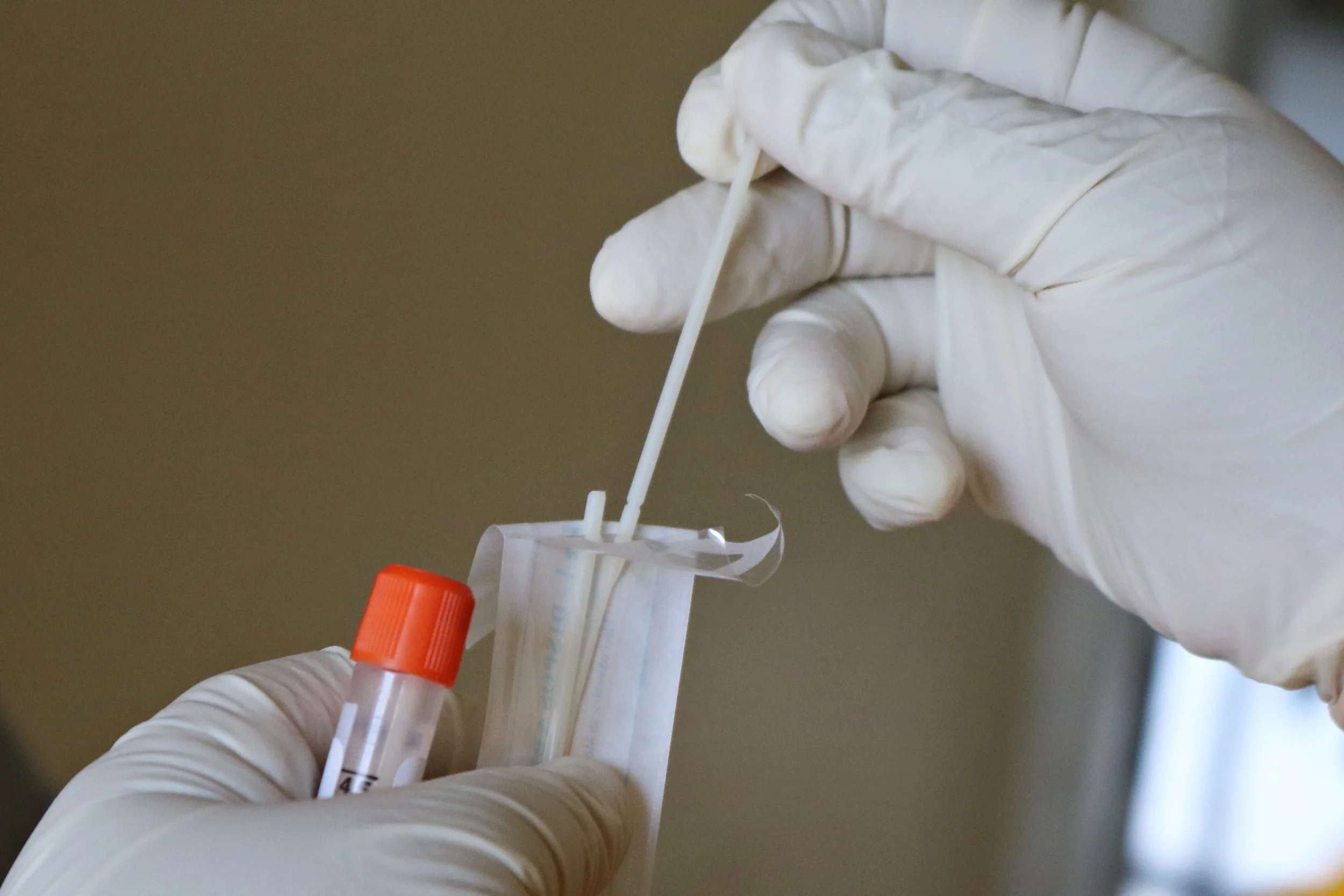
When paternity is disputed, the Texas Office of the Attorney General may ask a court to establish it. The court can order testing, and the state describes collecting cheek swabs at a court, clinic, or child support office. If you have an open case, follow its collection instructions before scheduling a private test (Texas court-ordered paternity guidance).
Texas law has two thresholds for qualifying genetic evidence: at least 99% probability of paternity using the statute’s specified calculation, and a combined paternity index of at least 100 to 1. A result that meets both can identify a man as the father for purposes of the statute, subject to rebuttal. It still isn’t a court order or a birth-record amendment (Texas Family Code § 160.505). For related decisions, read GameDay DNA’s guides to paternity testing and child support and what affects paternity test costs.
Can you use an at-home DNA test for Texas court or child support?
GameDay DNA’s self-collected at-home kits are for personal knowledge, not official use. Before purchasing a private test for a Texas case, ask the receiving court or agency what it requires for lab accreditation, identity verification, supervised collection, chain of custody, and report delivery. If the court or agency is arranging testing, follow its instructions rather than booking separately (Texas Family Code §§ 160.503–160.504; Texas court-ordered paternity guidance).
If you’re deciding which option to ask about, see GameDay DNA’s Texas legal vs. at-home paternity testing guide and its guide to legal paternity test collection.
How do you add or change a father on a Texas birth certificate?
Establishing paternity and updating an already filed birth record are separate steps. For an existing Texas birth record, the Department of State Health Services (DSHS) links to the birth certificate correction application, Form VS-170. Use the section for adding, removing, or replacing a parent and follow the supporting-document instructions for your situation (Texas DSHS’s parentage and birth certificate instructions).
If no father is listed: Depending on the case, supporting documents may include a filed AOP, a certified court order, or a certified marriage record when the parents married after the birth and qualify for that route. When using a filed AOP, both parents generally sign the correction application before a notary (Texas DSHS’s VS-170 application instructions).
If someone is already listed: Ask Texas Vital Statistics which documents apply before filing. The current form includes a route for a filed VS-158 rescission. If you use a court order, submit a certified copy of the complete order and make sure it directs the specific change you’re requesting (Texas DSHS’s VS-170 application instructions; Texas DSHS’s paternity FAQs).
GameDay DNA’s guide to changing the father on a child’s birth certificate explains why correcting an existing entry is different from filling a blank field. Follow the Texas DSHS instructions for the actual filing.
Frequently asked questions
Do you need a DNA test to sign a Texas AOP?
No. Eligible parents who agree on biological fatherhood can sign an AOP without a DNA test. If either person is unsure, the Texas AOP notice advises not signing until the question is resolved (Texas’s AOP rights and responsibilities notice; Texas Family Code § 160.302).
Can a parent under 18 sign a Texas AOP?
Yes. A minor can sign an AOP without parental consent if it otherwise meets Texas requirements. The certified entity can explain the steps and the legal effect before signing (Texas Office of the Attorney General’s AOP guide; Texas Family Code § 160.304).
Can paternity be established after the child turns 18?
Yes, in some cases. If the child has no presumed, acknowledged, or adjudicated father, Texas allows a parentage proceeding after the child becomes an adult. Different rules apply if someone already has legal status as the child’s father (Texas Family Code §§ 160.606–160.609).
Can prenatal or grandparent DNA testing establish paternity on its own?
No. Prenatal testing can help answer a biological question during pregnancy. Grandparent testing evaluates an indirect relationship when the alleged father cannot test. Neither report substitutes for a valid AOP or a court determination, so check what the receiving court or agency will consider before booking (Texas Family Code §§ 160.201 and 160.502–160.505). For more about who can participate, see GameDay DNA’s guides to prenatal paternity testing in Texas and grandparent DNA testing in Texas.
Find the right DNA testing option in Texas
Call GameDay DNA at 302-527-1789 or email info@gamedaydna.com with your ZIP code, who can participate, and whether you need results for personal knowledge or official use. Confirm the receiving court’s or agency’s requirements before booking a test for official use. GameDay DNA does not provide or coordinate immigration DNA testing. For visa or immigration testing, contact DNA Diagnostics Center (DDC) directly.
This guide provides general information, not legal advice. If someone is already recognized as the legal father, an order is in place, or a deadline is approaching, speak with a Texas family-law attorney before signing paperwork or purchasing a test.
