
A paternity test can clarify whether a tested man is a child’s biological father. That information may help family members make informed decisions, but the test itself does not repair trust, guarantee involvement, or determine the quality of a parent-child relationship.
The effect on a family depends on the circumstances, the result, and how people respond. Genetic information can also create distress or tension, so preparation should include more than choosing a kit or collection appointment.
A useful goal is to obtain accurate biological information while protecting the child’s privacy, dignity, and access to support.
What a Paternity Test Can Clarify
A direct paternity DNA test compares genetic information from the child and alleged father. The laboratory reports whether the tested man is excluded or whether the evidence supports paternity at the reported probability level.
That finding addresses a specific biological relationship. It does not explain someone’s intentions, evaluate parenting ability, or decide what a family should do next.
Understanding the scope of the test helps prevent unrealistic expectations. Before ordering, identify the question you want answered and what decisions may follow from either result.
Read our guide to what a paternity test can and cannot tell you for more detail.
How Biological Information May Help a Family
It Can Resolve a Specific Question About Fatherhood
When biological paternity is uncertain, testing can replace assumptions with genetic evidence. For some families, addressing that question may create a starting point for discussing future arrangements.
However, resolving a biological question is not the same as resolving every disagreement. If the conflict also concerns trust, communication, or past behavior, those issues may need separate attention.
Do not promise that everyone will feel reassured by the same result. Genetic findings can affect different family members in different ways.
It Can Inform Conversations About Family Connections
A biological finding may inform conversations about a child’s origins and connections with relatives. It should not be presented as a complete account of the child’s identity or as a replacement for existing caring relationships.
Use precise language such as “biological father,” rather than suggesting that DNA identifies the only “real” parent. Guidance from the American Academy of Pediatrics on adoption emphasizes that biological connections and adoptive family membership can coexist; one does not erase the other.
A paternity report answers a genetic question. It does not measure the importance of a caregiver’s commitment, history, or everyday presence.
It May Help Families Seek More Complete Medical History
Learning a biological connection may provide an opportunity to ask relatives about health conditions and ages at diagnosis. That information can then be shared with the child’s healthcare professional.
The distinction matters: a standard paternity test does not provide the family’s medical history or diagnose inherited disease. Family health history is collected through conversations, records, and other information about relatives.
Healthcare professionals can use that history to consider screening or further evaluation. Knowing a family history does not guarantee that an illness will develop or that one will be prevented.
It May Provide Evidence for an Official Matter
Legal paternity testing may provide a documented DNA report for a parentage proceeding, child-support matter, inheritance claim, or another official purpose. The appropriate process includes professional collection, identity verification, and documented chain of custody.
A report does not itself issue a support order, award custody, or guarantee financial stability. Confirm the receiving organization’s requirements before testing and seek qualified legal guidance about any additional steps.
Read our guide to establishing paternity and legal DNA testing for more context.
What Paternity Testing Cannot Promise
It Cannot Guarantee Stronger Bonds
A DNA test does not create affection, trust, or commitment. It can provide biological information, but how people use that information is a separate matter.
Avoid treating testing as a requirement for a family to be loving or complete. Adoptive parents, stepparents, grandparents, and other caregivers may already play central roles in a child’s life.
It Cannot Predict a Child’s Development
A standard paternity report does not predict intelligence, school performance, emotional regulation, or future behavior.
Research about involved parenting should not be presented as evidence that purchasing a paternity test causes better developmental outcomes. The test evaluates biological paternity; it does not provide parenting support or determine the environment in which a child grows up.
It Cannot Guarantee Peace of Mind
Some people may welcome the information. Others may experience sadness, anger, anxiety, or uncertainty. MedlinePlus identifies emotional and family consequences as important considerations when deciding whether to undergo genetic testing.
Preparing for more than one possible reaction is more useful than assuming the result will bring closure.
How to Prepare Before Testing
Discuss why the test is being considered and how the result will be used. Avoid presenting it as a loyalty test or promising that it will settle every concern.
Confirm who will participate, who can authorize a child’s testing, who will receive the report, and how the information will be stored or shared. Ask the provider to explain its consent, privacy, and documentation requirements before collection.
Consider what you would do if paternity is supported, if the tested man is excluded, or if the laboratory requests additional information. You do not need every future decision settled, but it helps to know where you can seek support.
For conversation guidance, read how to ask a partner for a paternity test.
Keep the Child’s Needs Central
Plan any conversation with the child around their age, understanding, and circumstances. Do not use the child to deliver messages between adults or ask them to take sides.
Choose language that separates the biological finding from the child’s worth and belonging. Avoid calling the child a “mistake” or describing one result as making the family less legitimate.
If you are unsure how to discuss an unexpected finding, consider guidance from a licensed mental-health professional experienced in children and family relationships. A testing provider can explain the laboratory process, but it should not be treated as a substitute for counseling.
What to Do After an Unexpected Result
First, read the laboratory’s conclusion and ask the provider to explain unfamiliar terms. Confirm which participants and samples the report covers.
If there are concerns about sample identity, related possible fathers, or information that was not disclosed before testing, raise them with the provider. Ask whether laboratory review or further collection is appropriate.
Allow time to understand the finding before sharing it widely. An unexpected result may affect other relatives’ privacy as well as the tested participants.
If an existing court order or legal parentage arrangement is involved, seek qualified legal advice before taking action. Do not assume a new DNA report automatically changes current obligations.
Choose the Testing Process That Fits Your Intended Use
An at-home paternity kit is intended for private, non-legal information. Participants collect cheek-swab samples themselves and return them according to the kit instructions.
Legal testing uses professional collection, identity verification, and documented chain of custody. If official use is anticipated, arrange that process before collecting samples rather than assuming an at-home report can be converted afterward.
If the alleged father cannot provide DNA, a different family relationship test may be considered. These indirect comparisons have different limitations and should be reviewed with the provider before ordering.
Explore paternity testing options to compare the appropriate pathways.
Frequently Asked Questions About Paternity Testing and Family Relationships
Can a paternity test make a family stronger?
It may provide information that helps family members make decisions, but stronger relationships are not guaranteed. The test evaluates biological paternity; it does not repair trust or determine how participants will respond. Genetic results can also create emotional strain.
Does a paternity test guarantee peace of mind?
No. People may experience relief, distress, uncertainty, or mixed emotions. Consider possible outcomes and support needs before testing rather than assuming one result will resolve every concern.
Can a paternity test reveal a child’s medical history?
No. A standard paternity report does not provide medical history or diagnose genetic conditions. Identifying a biological relative may help you gather health information through conversations and records, which can then be discussed with a healthcare professional.
Will confirming paternity make someone more involved as a parent?
A DNA result cannot guarantee involvement or predict parenting behavior. It addresses a biological relationship, not someone’s willingness or ability to provide care.
Does a biological result replace an adoptive parent or stepparent?
No. A genetic finding does not measure the value of an existing caregiving relationship. Biological origins and family membership should be discussed without treating adoptive or other caring relationships as less legitimate.
Does a paternity test automatically create child-support or custody rights?
No. A DNA report may provide evidence for an official matter, but it does not itself issue a support or custody order. Confirm the required legal process with the relevant authority or a qualified attorney.
How should we tell a child about an unexpected result?
Use age-appropriate language, avoid blame, and separate the biological information from the child’s worth or belonging. If the situation is complicated, seek guidance from a qualified child or family mental-health professional before deciding how much to explain and when.
Can an at-home paternity test be used for a family-court matter?
An at-home test is intended for personal knowledge and does not provide the professional identity verification and documented chain of custody used for legal testing. Confirm the court’s requirements before collection.
What should we do if the result creates conflict?
Ask the provider to clarify the report, allow time to process the information, and consider individual professional support. If legal questions arise, seek legal advice rather than assuming the laboratory result determines every next step.
Conclusion: Biological Clarity Is a Starting Point, Not a Relationship Guarantee
A paternity test can clarify a biological father-child relationship. It may inform family conversations, help identify relatives to approach for health history, or provide evidence through an appropriate legal testing process. It does not guarantee stronger bonds, better health, financial support, or emotional closure.
What happens next requires care beyond the laboratory report. Protect the child’s privacy, use language that respects existing family relationships, and seek professional support when medical, emotional, or legal questions arise.
GameDay DNA can explain testing options, participants, collection requirements, pricing, and estimated turnaround. Explore paternity testing options or contact the team before ordering to confirm the appropriate process for your situation.
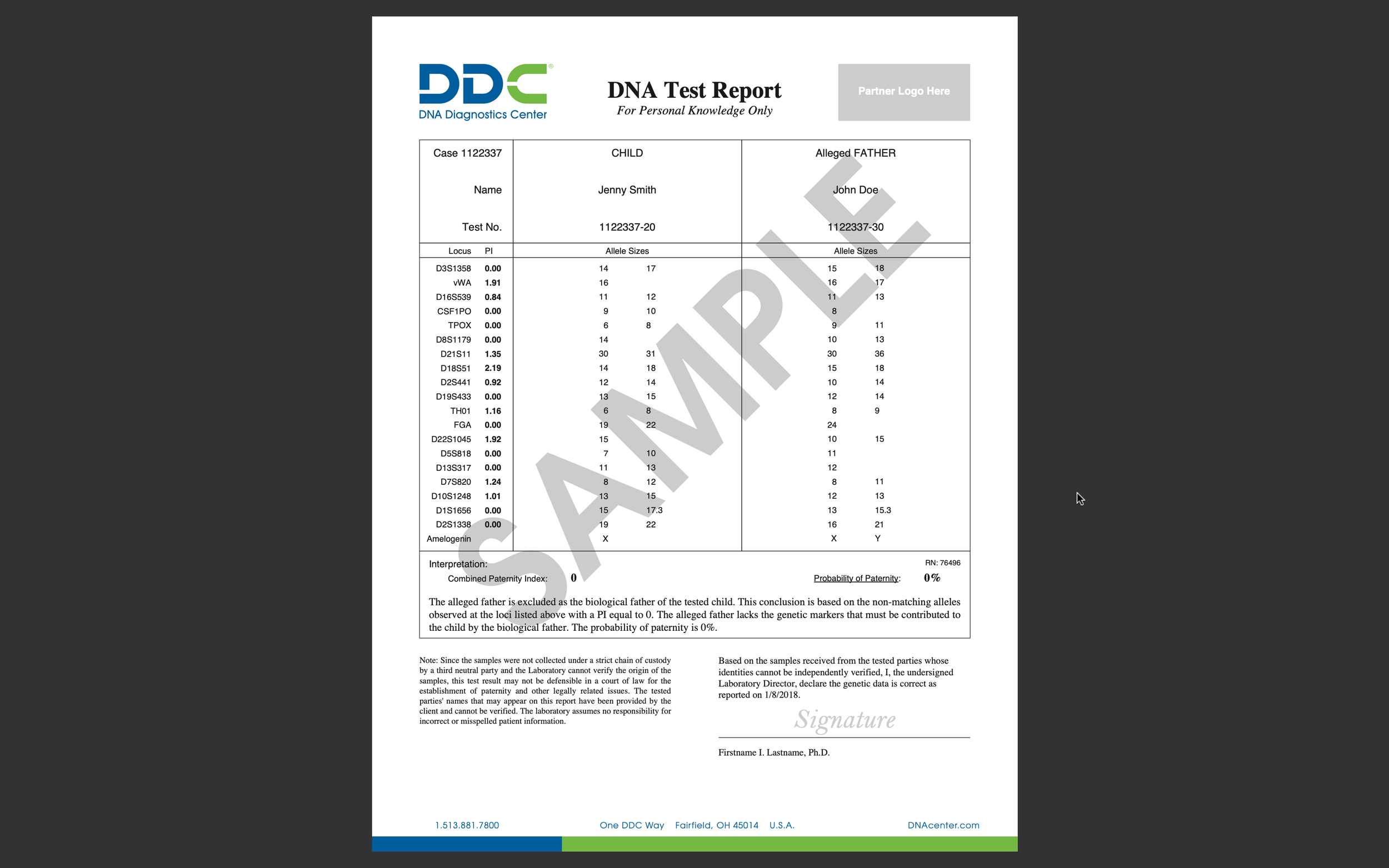
Get confidential paternity answers from home with GameDay DNA’s at-home paternity DNA test kit. This non-legal, informational test compares DNA from an alleged father and child using simple cheek-swab samples.
No blood draw, appointment, clinic visit, or laboratory visit is required. Collect samples privately at home, return them using the prepaid shipping materials, and receive your results by email after the laboratory completes testing.
Important: This is a non-legal, informational DNA test for personal knowledge only. It is not court-admissible and cannot be used for court, child support, custody, immigration, adoption, inheritance, birth-certificate changes, Social Security, or other official matters.
This at-home, non-legal DNA test is not available to residents of New York State, including New York City. New York law requires DNA relationship testing to be performed through a legal testing process with professional sample collection, identity verification, and documented chain of custody.
If you live in New York or need legally admissible results for any purpose, contact GameDay DNA before samples are collected to arrange a legal DNA test with identity verification and documented chain of custody.
Quick facts
What is this test?
A non-legal, informational at-home DNA paternity test
Who needs to participate?
The child and alleged father; the mother may be included if available
What type of sample is used?
A cheek-swab DNA sample from each participant
Is a blood draw required?
No
Is an appointment required?
No. Participants collect cheek-swab samples at home
How long do results take?
Typically within 2 business days after the laboratory receives all required samples
How are results delivered?
By email to the email address provided with the order
Can I use results in court?
No. A legal, witnessed, chain-of-custody test is required for official use
How is the kit shipped?
In a discreet USPS package; the exterior does not identify the type of test ordered
How do I return samples?
Use the prepaid return envelope and drop it at a FedEx location
How the at-home paternity test works
1. Order your at-home paternity test kit
Order your DNA kit online. GameDay DNA ships the kit in a discreet USPS package; the exterior shipping label does not reveal the type of DNA test ordered. Orders placed before 3:00 p.m. are generally shipped the same business day, while later or weekend orders are processed on the next business day. Delivery is typically estimated at 1–3 business days after shipment.
2. Collect cheek-swab samples at home
The child and alleged father each provide a painless cheek-swab sample using the materials included in the kit. The mother may also participate if available, although the basic test compares the alleged father and child.
Wash your hands before collection, follow the step-by-step instructions in the kit, and press each swab firmly against the inside of the cheek as directed. A cheek swab collects cells from the inside of the mouth; no needles or blood draw are needed.
3. Complete the informational paternity form
Complete the Informational Paternity Test Form included with the kit. For privacy, names on the form are not printed on the final report. Results identify participants by their testing roles, such as Alleged Father, Child, and Mother.
4. Return samples to the laboratory
Place each participant’s swab envelope and the completed paternity information form into the prepaid return envelope provided. Return the package through a FedEx office. For the fastest processing, send your samples to the laboratory the same day or the day after collection.
5. Receive confidential paternity results by email
The laboratory begins testing after it receives all required samples. Results are typically available within 2 business days after the lab receives the complete sample set. Your report is delivered to the email address provided with your order.
Who should use this test?
This at-home DNA paternity test is designed for people who want private, personal answers about a possible biological father-child relationship. It may be appropriate if you want information for peace of mind and do not need results for an official matter.
Choose a legal DNA paternity test instead if you may need the report for:
Court, child support, or custody
Immigration
A birth certificate or Social Security matter
Estate, inheritance, or other official documentation
Any proceeding requiring verified identities and documented chain of custody
A self-collected at-home test cannot generally be converted into a legal test after samples have been submitted.
What’s included
Your at-home paternity test kit includes the materials and instructions needed to:
Collect cheek-swab DNA samples from participants
Complete the required informational paternity form
Package samples for return
Return the completed kit using the prepaid return envelope
Follow all collection and shipping instructions in the kit to help prevent a delay or recollection request.
Privacy and discreet shipping
GameDay DNA ships home collection kits in a USPS package that does not reveal the type of test you ordered on the outside of the box. Your test results are sent confidentially to the email address provided with your order, and the report identifies participants by role rather than by the names entered on the informational form.
Returns and refunds
If you request a refund before the home collection kit ships, GameDay DNA provides a full refund. Once the kit has shipped, the sale is final and is not refundable under the Terms of Sale.
If you are purchasing a kit for someone else, contact GameDay DNA before ordering. For online orders, the individual who places the order is generally considered the Tested Party under the Terms of Sale.
Need help before ordering?
If you are unsure whether you need an at-home informational test or a legal, court-admissible paternity test, contact GameDay DNA before purchasing a kit.
Call 302-527-1789 or email info@gamedaydna.com.
Follow us on Instagram and Twitter! If you have questions about paternity tests or other DNA testing services, please contact our Client Support Center at 302-529-1789, Mon-Sunday from 8:00 AM to 9:00 PM Eastern Time. Our friendly, expert representatives are ready and happy to help. Get answers anytime by visiting our Help Center.
